Why Diagnostic Testing Matters
Your vision is complex — and so are the conditions that can affect it.
That’s why we use more than just standard eye charts or vision screens. At Value Optical, our advanced eye diagnostic tests help us look deeper, spot problems earlier, and tailor treatment for every patient.
These tools are especially valuable for detecting conditions like:
- Glaucoma
- Diabetic retinopathy
- Macular degeneration
- Optic nerve issues
- Visual field loss
Curious if you should get this done?
3 Key Diagnostic Tools We Use
1.Visual Field Testing (VFT)
Checks your side vision to detect hidden blind spots.
While many eye diseases start at the edges of your vision, they often go unnoticed. VFT uses a special machine to check your peripheral (side) vision in every direction — a critical test for:
- Glaucoma
- Stroke-related vision loss
- Brain tumors affecting vision pathways
Completely painless. You simply respond to light signals while focusing on a central point.
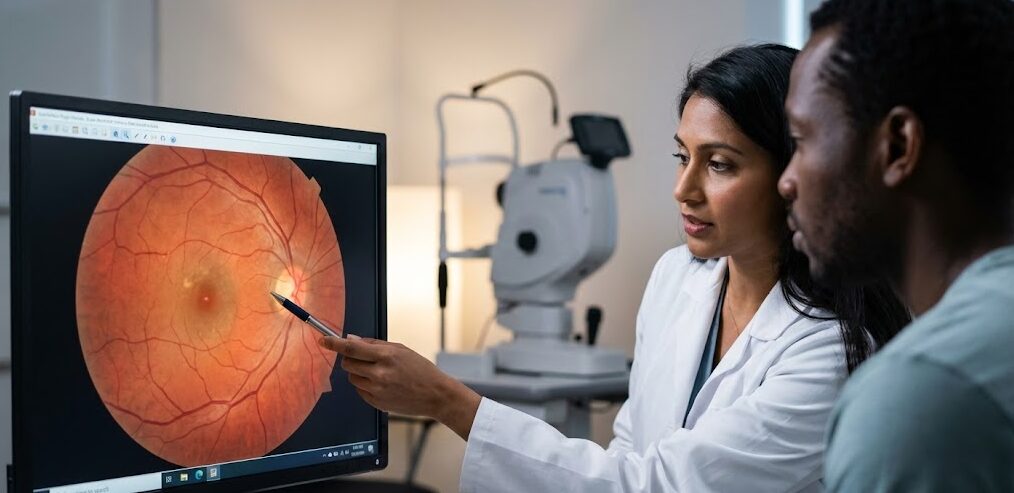
2.Fundus Photography
Captures high-resolution images of the back of your eye.
Your retina, optic nerve, and blood vessels can reveal early signs of eye disease — even before you feel symptoms. With fundus photography, we take sharp, color images that:
- Track diabetic eye disease
- Monitor optic nerve health
- Document macular changes over time
This test helps us compare images over the years and catch subtle changes others might miss.
3.Specialized Screening Tools
Tailored tests for your personal risk factors.
Depending on your age, medical history, and vision concerns, we may also use:
- Pachymetry – measures corneal thickness (helps assess glaucoma risk)
- Angle imaging – examines drainage channels in the eye
- Retinal OCT scans – if needed in addition to general testing
These tests help your doctor see exactly what’s happening inside your eye — at a microscopic level.
Who Needs These Tests?
If you’ve been told you have:
- Diabetes
- A family history of glaucoma or blindness
- New symptoms like flashes, floaters, or blurry vision
Advanced diagnostic testing is one of the most important steps you can take. Even without symptoms, these tests offer peace of mind and early protection — especially if you’re over age 40.
It’s Better to be Safe!
What to Expect During Testing
All of these tests are:
• Non-invasive
• Quick (typically 5–15 minutes)
• Painless
You’ll simply sit comfortably while we guide you through each step. Many people are surprised at how easy and stress-free the process is.
Frequently Asked Questions
Are these tests covered by insurance?
Many plans cover diagnostic testing if there’s a medical reason — such as diabetes or vision loss. Our staff can help you verify coverage before your appointment.
Do I need these tests every year?
Not necessarily. We recommend them based on your personal eye health, symptoms, and risk level.
Is this included in a regular eye exam?
Some diagnostic tools are included, but others (like fundus photography or VFT) may be recommended as add-ons depending on your case.
This article is part of Value Optical’s educational series, created to help the people of Trinidad & Tobago make confident, informed choices about their eye health.