Seeing clearly is important — but seeing the whole picture is even more valuable. That’s where a comprehensive eye exam comes in. These exams not only ensure you’re seeing at your best but also allow your eye doctor to detect early signs of eye disease or other underlying health conditions. A yearly eye exam is one of the simplest and most effective ways to protect your long-term vision.
What Is a Comprehensive Eye Exam?
A comprehensive eye exam is a detailed evaluation of your vision and eye health. It goes far beyond just updating your glasses prescription. Your optometrist examines the front and back of your eyes, measures how well your eyes work together, evaluates eye pressure, and uses imaging technology to look at internal structures. It’s your first line of defense against serious eye conditions like glaucoma, macular degeneration, and diabetic eye disease.
Curious if you should get this done?
What’s Included in a Comprehensive Eye Exam?
Our exams are designed to be thorough and personalized. Every test we perform gives your doctor key insights into your current eye health and your risk for future problems. Here’s what a typical visit might include:
1.Vision Testing
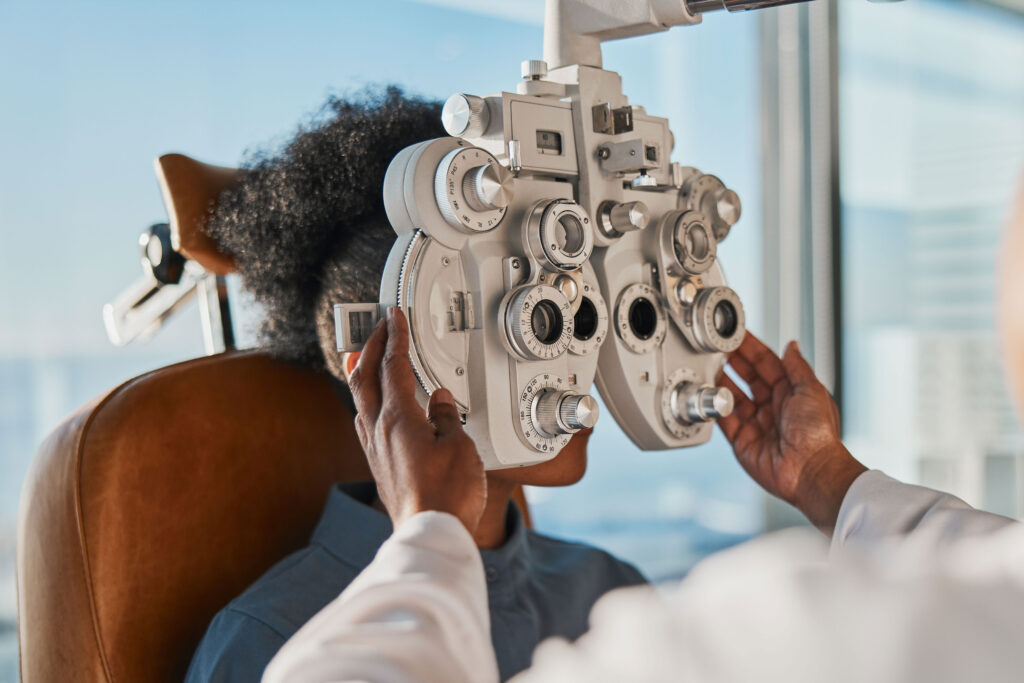
Your optometrist will assess how clearly you see objects at various distances. You’ll read letters on a chart, identify contrast and clarity, and have your prescription fine-tuned with a phoropter (the machine with all the lens dials). We’ll also test for refractive errors like nearsightedness, farsightedness, astigmatism, and presbyopia to determine if you need corrective lenses.
2.Eye Pressure Measurement
We use a quick, comfortable test to measure the pressure inside your eyes. Elevated eye pressure can be a warning sign of glaucoma. Early detection of abnormal pressure levels can prevent vision loss before it starts.
3.Personalized Screening Based on Risk Factors
If you have a family history of eye disease, diabetes, high blood pressure, or are over the age of 40, your doctor may recommend additional screening tests. These could include corneal thickness measurement (pachymetry), angle testing for glaucoma risk, or even blood vessel analysis for diabetes-related complications.
Who Should Get a Comprehensive Eye Exam?
Comprehensive eye exams aren’t just for people with vision problems. Even if you see perfectly, these exams help detect early signs of conditions you might not feel or notice. Children, adults, and seniors all benefit — especially if they wear glasses, use digital screens regularly, or have underlying health issues like diabetes or hypertension.
It’s Better to be Safe!
Common Conditions We Catch Early
Many eye conditions develop gradually and without pain. With a full eye exam, we can catch: glaucoma (where pressure damages the optic nerve), cataracts (clouding of the lens), macular degeneration (affecting central vision), dry eye disease, and more. Early treatment can slow or stop progression and preserve your sight.
What to Expect During Your Visit
Our clinics are designed to make your visit as comfortable as possible. After check-in, you’ll be guided through a series of tests and evaluations. The process usually takes between 20 and 45 minutes. Your doctor will explain results clearly and recommend any follow-ups or treatment needed. If dilation is necessary, we’ll advise you in advance.
Why Choose Value Optical?
Since 1994, Value Optical has been trusted across Trinidad and Tobago for our combination of clinical excellence and friendly service. Our comprehensive eye exams use advanced technology, including OCT and fundus imaging, to provide complete care. We also accept most major insurance plans and offer convenient locations nationwide.
Book Your Comprehensive Eye Exam Today
If it’s been a while since your last check-up — or you’ve never had a full eye exam — now is the perfect time. Our expert team is here to help you protect your vision, detect issues early, and feel confident in your eye health. Don’t wait for symptoms to appear — book your appointment today.
This article is part of Value Optical’s educational series, created to help the people of Trinidad & Tobago make confident, informed choices about their eye health.